The year of snake gourds and a stubborn pomegranate
July 12, 2026
Two experiments from the backyard — a trellis full of snake gourds and the long game of growing a pomegranate tree.
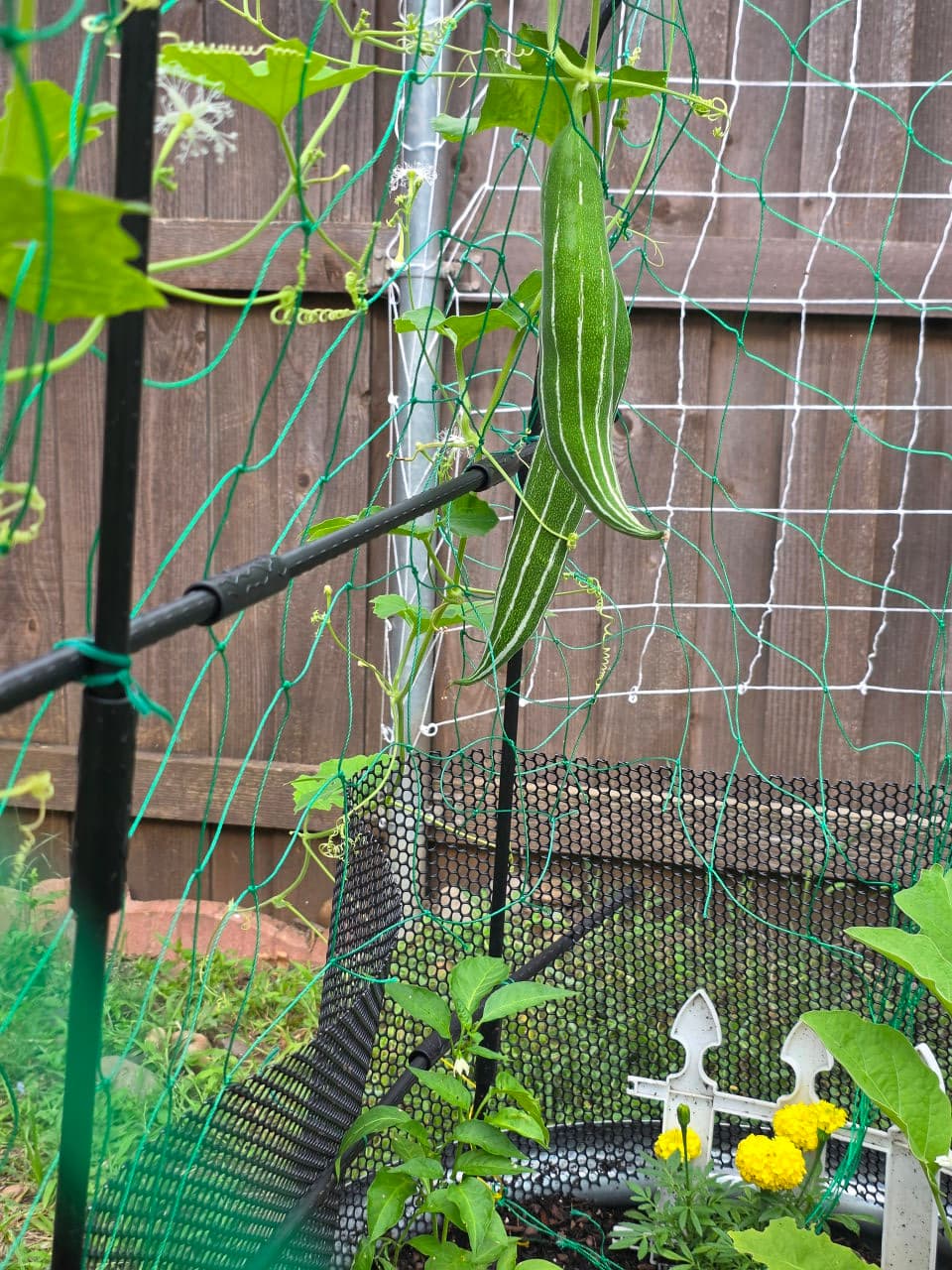
Two stars in the backyard this season: a snake gourd vine that tried to take
over the fence, and a pomegranate that is teaching me patience.
Snake gourds
If you've never grown snake gourds (padwal / pudalangai), the short version:
give them a strong trellis and get out of the way. The vine is enthusiastic —
tendrils grabbing anything within reach — and the gourds themselves grow
absurdly fast once they set. Miss a couple of days and a slim, elegant gourd
has become a curled, three-foot showpiece.
A few things that worked for us:
- Height matters. The gourds hang straight down when they have room —
fruit growing near the ground curls into spirals. (The curly ones taste
the same; they're just more fun to photograph.) - Hand-pollinating helps. The flowers open in the evening — delicate,
white, and fringed like lace. A quick brush between the male and female
flowers noticeably improved how many fruit set. - Pick them young. Around 12–18 inches they're tender and perfect for
kootu and poriyal. Leave one on the vine to mature and save the seeds —
they turn a dramatic red inside.
The harvest outpaced our kitchen by August. Neighbors received gourds. The
neighbors' neighbors received gourds.
The pomegranate
The pomegranate is the opposite story — nothing about it is in a hurry.
It spent its first season quietly settling in and making leaves, and just
when I'd stopped checking, it produced its first flowers: waxy, brilliant
orange-red bells that look almost artificial.
Most of the early flowers dropped (normal, apparently — young trees flirt
before they commit), but the ones that held slowly swelled into fruit, the
blossom end still wearing its little crown. Watching a pomegranate ripen is
a months-long exercise in not poking it.
Lessons so far:
- Full sun, light water. It sulks in soggy soil; treat it a little mean
and it thrives. - Don't rush the harvest. The fruit is ready when it turns from round to
slightly angular, and it sounds metallic when tapped — pick too early and
it never sweetens. - Prune for a few strong trunks, or it becomes a thicket of suckers with
opinions.
The scorecard
Snake gourds: instant gratification, one season, buckets of produce.
Pomegranate: the long game, but every fruit feels like a small trophy.
The garden needs both kinds — something that rewards you now, and something
that makes you look forward to next year.
Comments
No comments yet — be the first.